
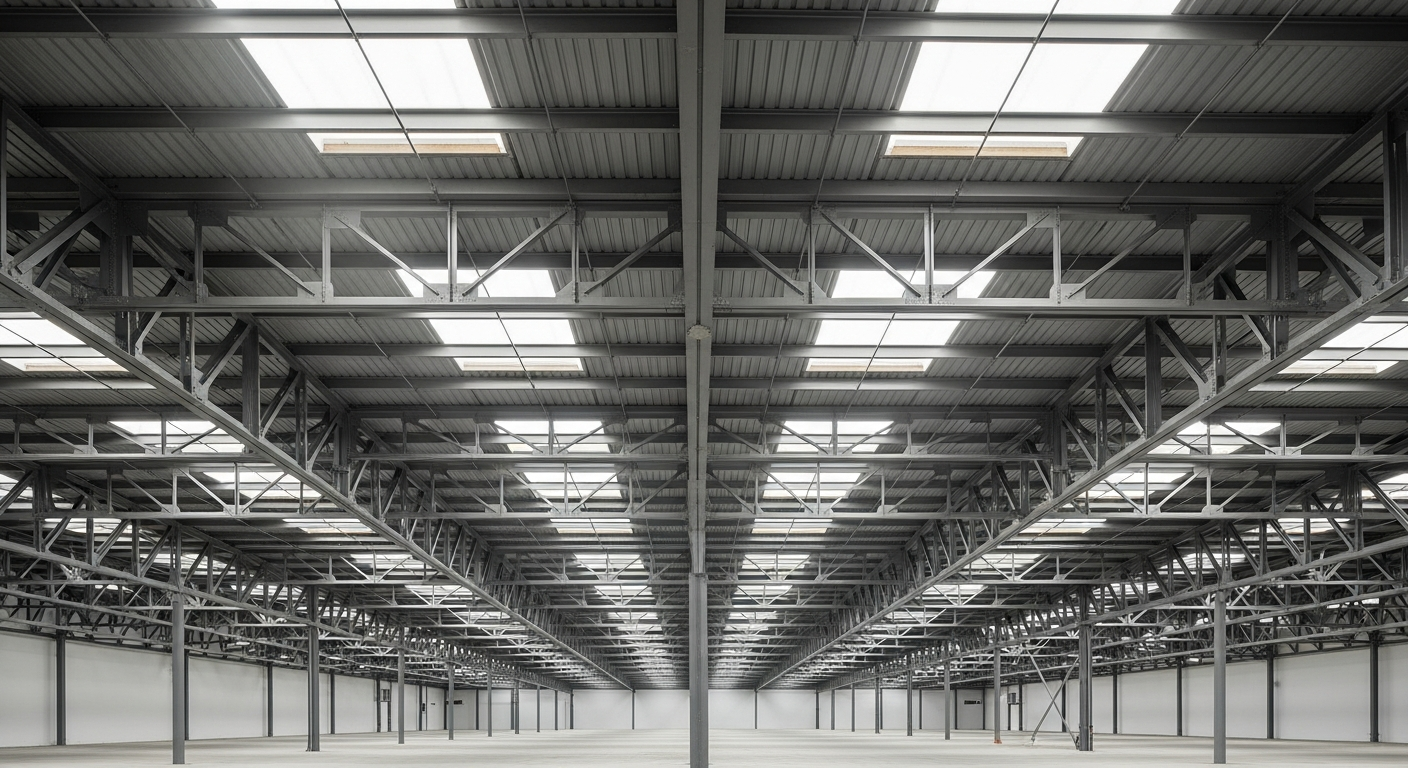
Commercial roofing that keeps your business running
A commercial roof leak does not just damage the building. It disrupts your business, threatens your inventory, and creates liability problems. We work with property owners and managers across LA to keep commercial roofs in good shape and fix problems fast when they come up.
Commercial systems we work with
We install and service every major commercial roofing system. TPO is the most popular right now for good reason: energy efficient, durable, cost effective for flat and low-slope roofs. We are experienced with heat-welded seams, which is where most TPO failures happen when installation is done wrong.
EPDM rubber roofing has a 30+ year track record and is great for large flat roofs. Modified bitumen is the multi-layer asphalt system common on older LA commercial buildings, and we handle torch-applied, cold-applied, and self-adhered versions. We also maintain plenty of built-up (tar and gravel) roofs that are still doing their job.
For warehouses, retail, and industrial buildings, we install standing seam and corrugated metal. And for restaurants and commercial kitchens with rooftop grease exposure, PVC membrane is the right call because it resists chemical damage.
Commercial services
We work with general contractors on new construction and directly with property owners on reroofing projects. For repairs, we handle leak repair, membrane patching, flashing replacement, and drain maintenance, working around your business hours when possible.
We also offer scheduled maintenance programs that extend your roof’s life and catch small issues before they become expensive. If your existing roof still has life in it, silicone, acrylic, and elastomeric coatings can add 10-15 years at a fraction of replacement cost. And for emergencies, we have 24/7 response for active leaks and storm damage on commercial properties.
Commercial roofers near me — why LA property owners choose us
When you search for “commercial roofers near me” in Los Angeles, you get a wall of national franchise outfits and lead-broker sites that pass your job to whoever bids first. We are a local crew that pulls permits in your name, shows up on the building with a project manager, and stays on the job until the final city sign-off.
Service area. Greater LA County: from Calabasas through the entire San Fernando Valley, across Downtown, Mid-City, Hollywood, Koreatown, the Westside, the South Bay, Long Beach, the San Gabriel Valley, and out to the Inland industrial corridors. We run two-truck rolling stock that can reach most addresses inside the 60-90 minute window during business hours.
Response times. Same-day on active leaks for property managers with tenant space at risk. Next-day for non-emergency inspections and bid walks. A written proposal usually goes out within 48 hours of the walk-through with line-item pricing.
License and insurance. California C-39 roofing license in good standing with the CSLB, plus general liability and workers’ comp coverage at the limits your COI requirements typically ask for ($1M/$2M GL with an additional insured endorsement available on request). We can email a current COI before the walk so your risk management team has it on file.
Building types we work on. Class A and Class B office buildings, big-box and strip-center retail, distribution warehouses, light manufacturing, multi-family apartment and condo associations, restaurants and food service (where PVC matters), medical office buildings and outpatient clinics, places of worship, schools, and self-storage facilities. The roof system varies but the playbook is the same: diagnose accurately, quote in writing, install per manufacturer spec, document for the warranty file.
If a leak is active right now, our emergency roof repair line is the fastest path to a tarp and a real fix.
Commercial roof leak repair process
A commercial leak is usually not where the ceiling stain is. Water enters through a seam, a penetration, or a flashing failure, then tracks along the deck or down through insulation board until it finds a fastener hole or seam to drip through. Our diagnostic process is built to find the actual source, not the symptom.
1. Visual and uplift inspection. Two-person walk of the roof surface. We photograph every penetration, seam, drain, scupper, parapet termination, and equipment curb. We pull and reseat any obviously failed flashing.
2. Infrared moisture scan. For larger commercial roofs and any leak that is not visually obvious from the surface, we run an infrared thermal scan after sundown. Wet insulation holds heat longer than dry insulation and shows up as a bright signature on the IR image. This maps the moisture footprint inside the roof assembly so we know exactly how far the saturation has spread.
3. Flood test or dye test. For ponding areas, parapet wall terminations, and drains we suspect are leaking, we run a controlled flood test with plugged drains or inject fluorescent dye and trace it to the interior. A flood test tells us in 30 minutes whether the membrane in that section is sound.
4. Core sample. If the IR scan shows widespread wet insulation, we pull a 4-inch core sample down through the assembly and inspect the deck, vapor barrier, insulation, and underside of the membrane. The core sample also tells us what the existing roof system actually is — important for old buildings where the as-built drawings are wrong or missing.
5. Emergency tarping. If weather is coming in and the diagnostic work cannot finish before the next rain event, we install a heavy-duty reinforced tarp anchored with sandbags or screwed-down battens. Commercial tarping holds through normal LA winter storms, not just a drizzle. Cost typically $400 to $1,500 depending on roof size.
6. Permanent repair. Once we know the source, the repair is scoped against the existing system: TPO seam re-weld, EPDM patch with primer and seam tape, modified bitumen torch-down patch, built-up flashing rebuild, or full drain replacement. All repairs use materials that match the existing membrane so the warranty (if any remains) is not voided.
7. Drainage assessment. Most commercial leaks have a drainage component. We check that drains are flowing, scuppers are clear, and the slope still moves water to the low points within 48 hours of rain. If the slope has gone flat from settled insulation or compressed ISO board, we recommend tapered fill during the repair.
Same-day response is the default on active commercial leaks. After hours, our 24/7 emergency line gets a tarp crew rolling within a couple of hours for most LA addresses.
Commercial roofing by LA submarket
Commercial roofing is not one job — every part of LA has its own dominant building types and its own typical roof system. Here is what we see day to day across the county.
Downtown LA and Arts District. The mix is older brick-and-timber buildings from the 1910s-1930s (Historic Core, Toy District, Arts District), mid-rise concrete offices along Figueroa and Wilshire, and converted industrial in the Arts District. Built-up and modified bitumen still dominate on the older stock. Newer Class A office buildings are mostly TPO over ISO board. Parapet wall flashings and old internal drain bowls are the two failure points we patch most often. For a deeper look see our Downtown LA commercial roofing guide.
Mid-City, Koreatown, and Mid-Wilshire. Heavy multi-family with three to six-story walk-ups and 1960s-1970s office stock. Most flat roofs here are modified bitumen with cap sheet or aging TPO. The big issue is shared roof access on multi-tenant buildings and HVAC curbs that were never properly flashed when the units were swapped out 10 years ago. For pricing and the specific access challenges, see our roofing contractor near Koreatown guide.
San Fernando Valley industrial. Van Nuys, North Hollywood, Sun Valley, Pacoima, and the Sylmar industrial corridor are loaded with single-story tilt-up warehouses (10,000 to 80,000+ sq ft footprints) on TPO or ballasted EPDM. Heat is the killer up here — Valley summers run 105-110 and degrade membrane chemistry faster than coastal exposures. We recommend reflective TPO or a silicone coating refresh every 10-12 years on Valley industrial.
South Bay and Long Beach commercial. Carson, Wilmington, San Pedro, Torrance, Gardena, and the Long Beach port-adjacent industrial belt. Salt air corrodes fasteners and flashing metal faster than any other LA submarket. We default to stainless or hot-dip galvanized fasteners and marine-grade sealants on every project within five miles of the coast. Long Beach also has a heavy concentration of single-tenant retail and small commercial off Pacific Coast Highway and Atlantic Avenue, mostly on aging built-up or modified bitumen.
Westside office. Century City, Westwood, West LA, Culver City. Mostly Class A and B office buildings with TPO or PVC over heavy ISO, plus a fair amount of green roof and amenity deck construction on newer builds. Pedestal-paver patios and rooftop HVAC penthouses create dozens of penetrations per roof — that is where leaks start.
Inland industrial and San Gabriel Valley. City of Industry, La Puente, Vernon, Commerce, Pico Rivera, and the Industry/Whittier corridor. Distribution warehouses, light manufacturing, and food processing. PVC is the standard for food and grease exposure. TPO for everything else. Ponding water in the centers of large warehouse roofs is the recurring complaint because the original tapered insulation slope flattens out over 15-20 years of foot traffic.
TPO vs EPDM vs PVC vs built-up — cost and use case
Choosing the system is the biggest cost decision on a commercial re-roof. Here is what each membrane actually costs installed in LA in 2026, what its real-world lifespan looks like, and where each one earns its keep.
TPO — $4 to $8 per sq ft installed. White single-ply membrane, heat-welded seams, 20-30 year lifespan. The default choice for new commercial in LA because it meets Title 24 cool roof requirements out of the box and costs less than PVC. Best for offices, warehouses, retail, and multi-family. Avoid on roofs with grease exposure.
EPDM — $4 to $7 per sq ft installed. Black or white synthetic rubber, adhesive or tape seams, 25-30 year lifespan with proven 40-year case studies. Best for very large flat roofs (think 50,000+ sq ft distribution) where the per-square-foot premium for TPO adds up to real money. Black EPDM absorbs heat and is being phased out for new work in LA because of Title 24 — white EPDM or a coating refresh is the workaround.
PVC — $6 to $10 per sq ft installed. Polyvinyl chloride single-ply, heat-welded seams, 25-30+ year lifespan with the longest track record of any single-ply (going back to the 1960s). Best for restaurants, food processing, and any building with rooftop kitchen exhaust, animal fats, or chemical exposure. Also the premium pick for higher-end office and mixed-use because it stays flexible longer than TPO.
Built-up (BUR) — $5 to $9 per sq ft installed. Multi-layer asphalt and felt with gravel ballast, 20-30 year lifespan. Largely replaced by single-ply on new construction, but we still install and maintain plenty of built-up on legacy LA commercial. Best when matching an existing built-up system on a multi-section roof where a partial tear-off would create transition headaches. Heavy — make sure the structure carries the load.
Standing seam metal — $9 to $15+ per sq ft installed. 24-gauge steel or aluminum panels, mechanically seamed, 40-50 year lifespan. Best for highly visible roofs (architectural commercial, mixed-use, churches), low-slope commercial that needs the longest lifespan available, and re-clad projects where the existing structure can carry the metal.
For a detailed head-to-head between the two single-ply leaders, see our TPO vs PVC roofing comparison.
Title 24 cool roof compliance for LA commercial roofing
Every commercial re-roof in Los Angeles has to meet Title 24, Part 6 of the California Energy Code. For low-slope non-residential roofs the requirements are specific:
- Solar reflectance of at least 0.63 aged (3-year aged value per CRRC).
- Thermal emittance of at least 0.75.
- Or an alternative path using Solar Reflectance Index (SRI) of 75 or higher.
- The product must be listed in the Cool Roof Rating Council (CRRC) directory with current ratings.
Practically, this means you cannot legally re-roof a commercial building in LA with black EPDM, dark mod-bit cap sheet, or untreated built-up gravel as the finished surface. White TPO, white PVC, white EPDM, and reflective coating over an existing membrane all qualify. Standing seam metal qualifies if the coil is finished with a CRRC-listed cool color.
We pull the CRRC product number, attach it to the permit package, and document the installation for the city inspector. Insulation R-value minimums also apply (R-20 to R-25 depending on assembly and conditioned-space designation) and we size the ISO board to match. None of this is optional — without the CRRC documentation the project will not pass final inspection.
Commercial roof maintenance programs
The cheapest commercial roof problem is the one you find at a scheduled inspection instead of through a tenant complaint. Our maintenance programs run on either a semi-annual (twice a year, before and after the wet season) or quarterly schedule depending on building age, roof system, and how much rooftop equipment generates traffic.
What is included on every visit:
- Walk every square foot of roof surface and photo-document membrane condition.
- Clear all interior drains, scuppers, and overflow drains. Bag and remove debris.
- Inspect every seam on single-ply membranes. Re-weld or patch any seam showing lift or fishmouthing.
- Check every penetration (plumbing vents, HVAC curbs, satellite mounts, conduit) and reseal any failed pitch pans or boot collars.
- Inspect parapet wall coping and counter-flashing. Re-caulk transitions and termination bars as needed.
- Note any pooled water, blistering, or alligatoring with photos and recommend remediation.
- Email a written report with photos and a punch list before we leave the site.
- Minor repairs (single-fastener reseal, small membrane patches under 4 sq ft, drain strainer replacement) are included.
Typical pricing. $0.10 to $0.30 per square foot per year depending on roof size, system, frequency, and complexity. A 20,000 sq ft warehouse on semi-annual service runs $2,000 to $4,000 per year. A 5,000 sq ft retail center on quarterly service runs $750 to $1,500 per year. Larger commercial portfolios get volume pricing.
The math is straightforward: a maintenance program costs a fraction of one interior water-damage claim. A single leak that damages tenant inventory, ruins ceiling tile, and triggers a mold abatement scope can run $10,000 to $50,000 in remediation plus lost rent. Catching the seam failure at the spring inspection costs $300.
For an in-depth look at coating as a maintenance-budget alternative to full re-roof, see our roof coating cost guide.
Why commercial roofing is different
Commercial roofs are bigger, flatter, and have more equipment on them (HVAC units, vents, drains, satellite dishes). The materials are different. The warranties are different. The building codes are different.
We have worked on office buildings, strip malls, warehouses, restaurants, churches, apartment complexes, and industrial facilities across LA. We understand the specific challenges of commercial work, including coordinating with tenants, working around business hours, and meeting the documentation requirements that property management companies need.
For property managers running flat-roof portfolios, our flat roofing service page covers the residential-and-commercial flat-roof crossover and our roof inspection service covers the annual walks property managers usually need for budget planning. If you have a leak right now and want to understand what a fair price looks like before calling, the flat roof cost guide walks through what residential and small-commercial flat roofs run in LA. Port-area and downtown property managers can also see our Long Beach roofing page for the specific scope adjustments we make on industrial and multi-tenant buildings near the harbor.
Cost
Commercial roofing is priced per square (100 square feet). Costs vary widely based on the system, building size, access, and existing conditions. We provide detailed proposals with clear line items so you can compare apples to apples.
Call (818) 446-6122 for a free commercial roof assessment or to get a crew on site for an active leak. Same-day response for emergencies, 48-hour turnaround on written proposals for planned work.