
Know what you are dealing with before it becomes a problem
A roof inspection tells you exactly where your roof stands: what is fine, what needs attention soon, and what can wait. Whether you are buying a home, selling one, or just want to know if that 18-year-old roof has more life in it, we give you the straight answer.
Who needs a roof inspection?
If you are buying a home, the general inspection gives your roof about 5 minutes of attention. A dedicated roof inspection gets someone on the roof, in the attic, and looking at the details that matter. It can save you from a $15,000 surprise after closing.
Selling? A pre-listing inspection lets you fix small issues before buyers find them and use them as negotiation points. Or it gives buyers confidence the roof is solid, which makes the deal move faster.
For homeowners with a roof 15+ years old, an annual inspection catches small problems before they get expensive. A loose piece of flashing is a $200 fix now and a $2,000 repair after it leaks for six months. Property managers benefit from regular inspections too: they protect your investment and keep tenants happy.
What we inspect
We look at your roof from three vantage points.
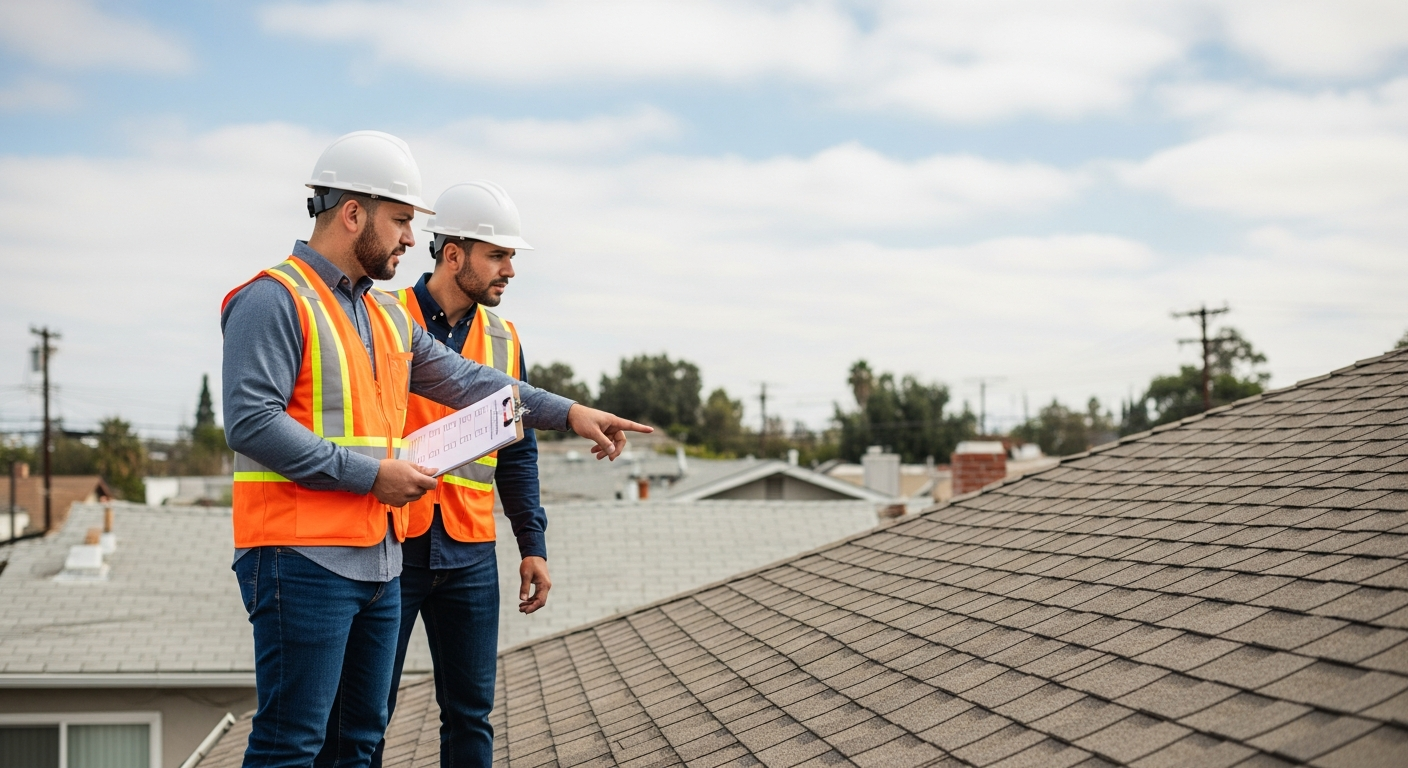
On the roof, we walk every section and check shingles (or tiles, or membrane), flashing, ridge caps, valleys, vent boots, pipe collars, and any penetrations. We check for wear, damage, improper installation, and aging.
In the attic is where you see the truth. We check for daylight coming through, water stains on rafters, mold, ventilation problems, and insulation issues.
From the ground, we examine gutters, downspouts, soffit, fascia, and visible signs of trouble. We also look for trees rubbing against the roof or leaves piling up in valleys.
The report
You get a written report with photos that covers:
- Current condition of every major roof component
- Estimated remaining lifespan
- Problems that need attention now
- Things to keep an eye on over the next few years
- Our recommendation: repair, maintain, or start planning a replacement
We explain everything in plain language. No jargon, no scare tactics, no sales pressure.
What our LA roof inspection includes
Every Los Angeles roof inspection we do follows the same checklist, whether it is a 1,400 square foot bungalow in Mar Vista or a 6,000 square foot Tudor in Hancock Park. The point of the checklist is consistency: nothing gets skipped because we are running long or the homeowner only asked about one specific issue.
Roof surface. Every shingle tab, tile, or membrane seam gets eyes on it. We document curling, cracking, granule loss, lifted edges, displaced tiles, and any blistering on flat sections. South and west-facing slopes get extra attention because UV damage shows up there first.
Flashing at every penetration. Chimneys, plumbing vents, attic vents, skylights, wall transitions, and dormer junctions. Flashing failures cause more leaks than any other single issue on LA roofs. We check the metal itself for rust, lifting, or pull-back, and we check the sealant for cracking and separation.
Valleys and ridge caps. Water concentrates in valleys, and ridge caps take the brunt of wind events. We look for displaced shingles in the valleys, damaged underlayment, and any ridge cap that has lifted or torn off during a Santa Ana wind event.
Pipe collars and vent boots. The rubber boots around plumbing vents are the shortest-lived part of most roofs. They typically fail at 8 to 12 years in LA’s UV, well before the shingles themselves give out. A cracked boot drips water directly into the wall cavity around your bathroom or kitchen vent.
Attic check. This is where most of the truth lives. We look at the underside of the decking for water stains, daylight, mold, and active drip points. We check insulation for compression and moisture. We measure attic temperature and confirm soffit and ridge ventilation are actually moving air. Roofs fail from inside more often than homeowners realize.
Gutters, downspouts, fascia, and soffit. A clogged gutter holds water against the fascia for weeks and rots the wood. If the inspection turns up soft or rotted boards, the report flags them for soffit and fascia repair. We clear visible debris, check for sagging or pulled fasteners, and confirm downspouts are draining away from the foundation. If the gutters are at end of life (rust, sagging in multiple spots, repeated overflow), the report flags it and we provide a separate gutter installation estimate alongside any roof recommendations.
Drone overhead documentation when safety requires. Steep pitches, fragile slate, three-story access, and any roof where walking risks damage gets photographed from above with a drone. The aerial shots also go into the report regardless of whether we walked the roof.
You get the full report with annotated photos, severity rankings, and our recommendation within 24 to 48 hours of the on-site visit.
When to schedule an LA roof inspection
Some inspections are time-sensitive and some are calendar-driven. Here are the situations that should put a roof inspection on your near-term to-do list.
Pre-listing for a home sale. Get the roof inspected before the buyer’s inspector finds the problems. A $250 inspection lets you handle small repairs on your own timeline and price. The alternative is a buyer’s inspection report that flags four items and triggers a $5,000 to $10,000 price concession request right before closing. For pre-listing, we provide a clean report you can hand to your agent and prospective buyers.
Pre-purchase before closing on a home. The general home inspector spends about 5 minutes on the roof, usually from the ground or a ladder at the eave. A dedicated roof inspection means 45 to 60 minutes on-site, walking the surface, checking the attic, and assessing remaining life. If you are spending $1.4 million on a Westside bungalow, $300 to know what the roof actually looks like is the cheapest insurance you will ever buy.
After a Santa Ana wind event. Gusts above 50 mph displace shingles, lift tiles, tear ridge caps, and crack flashing seals. The damage often is not visible from the street. We do post-storm inspections in the days following major wind events specifically to find what the wind exposed before the next rain hits.
After an atmospheric river or heavy rainstorm. LA gets a handful of significant rain events per year, and they expose every weak point that the dry months let slide. If you saw water inside the house, even briefly, an inspection finds the entry point. If you did not see water inside but want to know whether the storm did damage, a spring inspection is the right call.
Age-based intervals. For roofs under 15 years old, every 2 to 3 years is enough. After 15 years, switch to annual inspections. Past 20 years, an annual check is the difference between a planned replacement and an emergency one.
Insurance claim documentation. If you are filing a claim, an independent inspection report gives you leverage during the adjuster meeting and a basis for a supplemental claim if the initial estimate comes back light. See our guide to filing a roof insurance claim in Los Angeles for the full claim process.
Insurance policy renewal. Some LA carriers now require a roof inspection report before renewing policies on homes over a certain age. Our reports meet the documentation standard most carriers ask for.
Roof inspection in Hancock Park, Culver City, and other LA areas
We inspect roofs across Los Angeles County. Different neighborhoods have different roof profiles, age ranges, and failure patterns. The findings we see in Hancock Park rarely show up in Sherman Oaks, and vice versa.
Hancock Park. Most of this neighborhood falls inside an HPOZ (Historic Preservation Overlay Zone), and most homes still have original clay tile, slate, or wood shake from the 1920s and 1930s. Inspections here focus on individual tile condition (cracked, slipping, or displaced), underlayment age, and the integrity of flashing around the chimneys and multi-plane roof intersections common on Tudor and Spanish Colonial homes. The most common finding in Hancock Park is sound-looking tile sitting on underlayment that is at the end of its life — you cannot see it from the street, but a lift of a tile or two during inspection makes it obvious.
Culver City. A mix of post-war bungalows in Lucerne-Higuera, mid-century flat roofs across the older sections, and newer construction near Hayden Tract. The flat roofs are where we focus during Culver City inspections. Ponding water that sits more than 48 hours after rain is a sign the drainage has shifted, usually because the building has settled or a drain has partially clogged. We map standing water locations during the inspection and check the membrane underneath those areas for soft spots and seam separation.
Sherman Oaks and Studio City. Valley heat is the main story here. Summer roof surface temperatures hit 150 to 170 degrees, which ages asphalt shingles 5 to 7 years faster than coastal locations. A common finding on 12-year-old Sherman Oaks roofs is shingle granule loss that looks more like 18-year wear elsewhere in LA. We also check attic ventilation closely — many Valley homes have ventilation rated for cooler climates and run 20 to 30 degrees hotter than they should, which cooks the underside of the decking.
Pacific Palisades and Brentwood. These neighborhoods sit in Very High Fire Hazard Severity Zones. The inspection includes verification that the roof assembly is Class A fire-rated, which California requires for homes in these areas. We check for combustible debris in valleys and gutters, gaps around vents that could admit embers, and the condition of any non-rated wood elements at the eaves. If the roof has been re-covered without upgrading to a Class A assembly, that is a finding the homeowner needs to know about before the next fire season.
Beverly Hills and Bel Air. Steep hillside lots, slate and heavy tile, and limited access make Beverly Hills inspections more drone-dependent than most. We use drone overhead for the steep sections and walk what is safely walkable. The common finding here is slipped or fractured slate that is invisible from the ground, plus deteriorated copper flashing on older estates where 60 to 80 years of LA sun has finally caught up with the metal.
Mar Vista and Venice. Marine layer moisture combined with afternoon sun creates a daily wet-dry cycle that stresses materials more than steady dry heat. We see early curling and granule loss on shingles that would still look new in inland neighborhoods. Coastal corrosion on flashing fasteners is the other common finding — galvanized fasteners that would last 20 years in the Valley start backing out at 10 years within a few miles of the ocean.
If your neighborhood is not on this list, we still inspect there. We work across the entire LA basin, from the Valley through the Westside, Hollywood Hills, Pasadena, the South Bay, and Long Beach.
Drone vs walk-on inspection
Drones are useful tools. They are not a substitute for being on the roof.
We use drone photography when the roof is too steep to walk safely (anything above an 8/12 pitch), when the material is fragile (old slate, brittle clay tile, deteriorated wood shake), when the structure is questionable (three-story access with no safe tie-off), or when overhead documentation is needed for insurance. Drones produce sharp aerial photos that show membrane condition, drainage patterns, equipment penetrations, and overall layout.
What drones cannot do is feel the deck under your foot. Soft spots from rotted decking show up under body weight before they ever show on camera. A small dip you walk over feels obviously wrong; from a drone overhead, the same spot looks fine. Hail bruising on shingles is the same — you can identify it visually up close in a way that does not come through aerial photos. Sealant cracks around flashing, fastener back-out, and seam separation on flat membranes all read better from 18 inches away than from 60 feet up.
For most LA homes with walkable roofs, we walk the roof and use the drone for overhead documentation. For roofs that should not be walked, we drone the entire surface and supplement with whatever close-range access we can safely manage (eaves, ladder check at penetrations, attic).
This is also why “free inspections” from roofing salespeople are not real assessments. A salesperson glances at the roof from a ladder, points out three things they can sell you, and leaves. They are not on the surface for an hour. They are not in your attic. They are not producing a written report you can show an insurance adjuster or a buyer’s agent. They are looking for a way to sell you a roof, not a way to tell you what your roof actually needs.
Cost of a roof inspection in Los Angeles
Residential inspections run $150 to $400 in LA depending on roof size, pitch, access, and material. A standard 2,000 square foot single-story home with an asphalt shingle roof falls in the $150 to $250 range. A 4,500 square foot two-story home with tile and limited access runs $300 to $400. Steep hillside lots, slate or wood shake, and any roof requiring drone work tend toward the upper end.
Commercial roof inspections run $400 to $1,200 for low-slope and flat systems. A 10,000 square foot warehouse falls in the middle of that range. The price reflects walking time across a much larger membrane, equipment density (HVAC units, vents, drains, satellite dishes), and the more detailed documentation property managers and insurance carriers need.
What that $150 to $400 buys you:
- 45 to 60 minutes on-site for a residential inspection
- Roof surface walk-through (where safe)
- Attic inspection
- Drone overhead documentation when applicable
- Written report with annotated photos delivered in 24 to 48 hours
- Severity rankings on every finding
- Estimated remaining lifespan
- Repair vs replacement recommendation
- A document you can hand to a buyer, seller, insurance adjuster, or property manager
What free inspections from roof sales teams do not buy you: any of that. Free roof inspections in LA are sales calls disguised as inspections. The inspector works for the roofing company, not for you. The findings are framed to sell a job. There is no written report you can share, no documentation that holds up under insurance review, and no obligation on the contractor’s part to be honest about what your roof actually needs.
When you pay $250 for an inspection, the inspector works for you. The report tells you the truth, not a sales pitch.
What happens after the inspection
You get a written report with annotated photos delivered within 24 to 48 hours of the on-site visit. The report walks through every finding in the order we found it, ranked by severity.
Severity rankings. Each issue is ranked as immediate (active leak risk, address now), short-term (within 6 to 12 months, before the next rainy season), medium-term (within 2 to 3 years), or long-term (monitor at the next inspection). The ranking is based on leak risk, structural impact, and how fast the issue will compound if left alone.
Repair vs replacement recommendation. Based on the overall condition, age, and the cost of bringing the roof to good shape, we recommend either targeted roof repair, planned replacement within a specific window, or “good for now, recheck in 2 years.” Our repair vs replacement guide walks through how we make that call.
Insurance claim support. If the inspection was triggered by storm damage, the report is written to the documentation standard adjusters expect: dated photos from multiple angles, square footage affected, descriptions tying findings to the specific weather event, and a line-item repair estimate. Many homeowners use our report as their independent assessment alongside the adjuster’s visit.
Quote process. If repairs or replacement make sense, we provide a separate written estimate with itemized scope, material specs, labor breakdown, and warranty terms. The estimate is good for 30 days and reflects current LA market pricing. No upsell pressure. If your roof has 5 more years left and the right call is to wait, that is what the report says, and we move on.
Honest assessment regardless of who does the work. The inspection report stands on its own. You are free to take it to any contractor, use it in negotiations with a buyer or seller, or just file it for reference. We would rather lose the repair job than push work you do not need.
If the report identifies major issues — multiple failure points, end-of-life materials, decking damage — we walk through the signs of a roof at end of life with you so you understand what we found and why we are recommending what we are recommending. Same applies to commercial properties: see our commercial roofing page for how flat roof assessments translate into repair or recover decisions.
For a clear understanding of what protection comes with any repair or replacement work we recommend, review our blog post on roof warranties in Los Angeles.
Cost
Residential roof inspections typically run $150 to $400 depending on the size and complexity of the roof. Commercial inspections run $400 to $1,200. For that price, you get clarity on one of the most expensive components of your home or building.
Schedule your Los Angeles roof inspection
Call (818) 446-6122 to book an inspection. We work across LA County and most homes get scheduled within the same week. Pre-listing, pre-purchase, post-storm, insurance claim, or just because your roof is 20 years old and you want to know where you stand — every inspection follows the same checklist and produces the same detailed written report.
No sales pressure. No upsell. Just a clear picture of what your roof needs.