
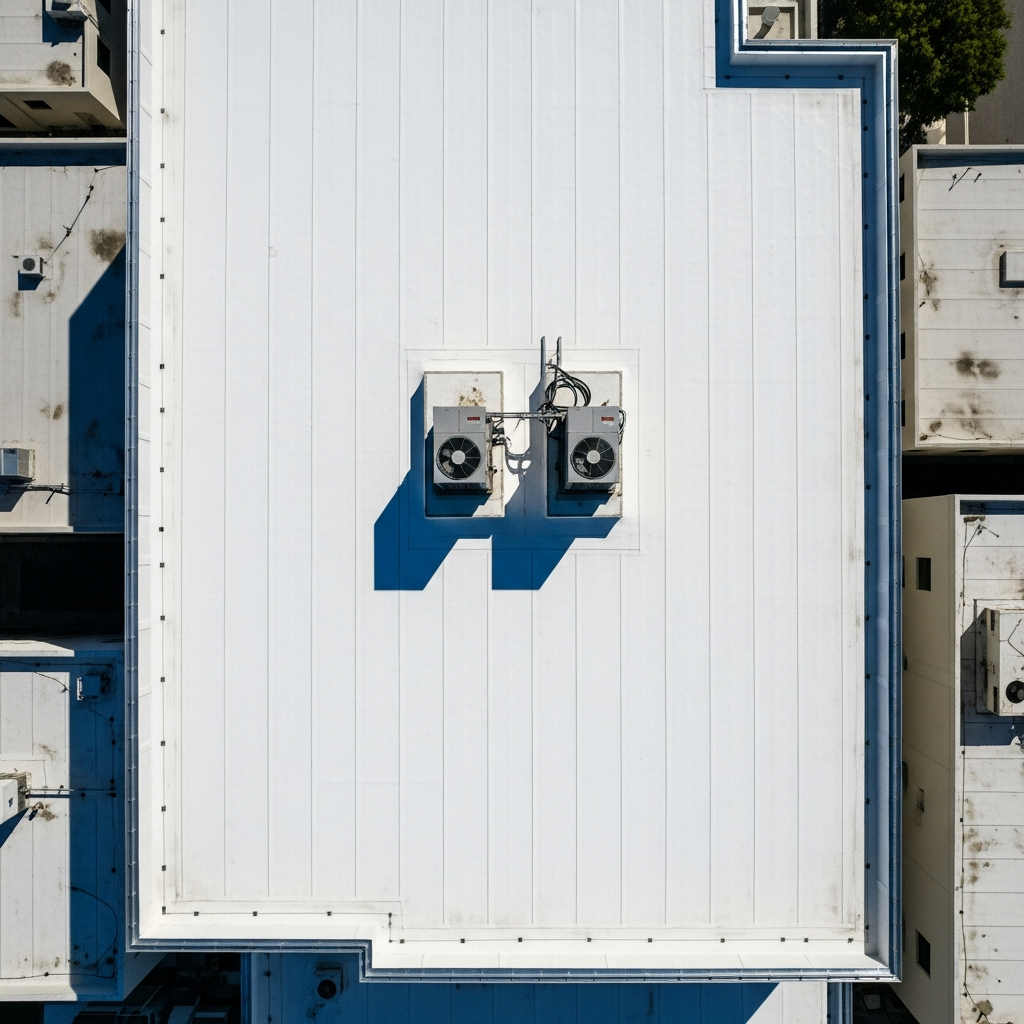
Flat roofs are everywhere in LA
Look at any LA neighborhood and you will see flat roofs on mid-century modern homes, Spanish-style houses with flat sections, apartment buildings, and commercial properties. The flat-roof look is part of the city’s architectural identity, and the climate makes it practical. No snow load to worry about, just sun, heat, and the occasional heavy rain.
We install and repair flat roofing systems for residential and commercial properties across Los Angeles.
Flat roof materials
TPO (Thermoplastic Polyolefin) is the current industry standard for flat roofs. It is a white, single-ply membrane that reflects solar heat, keeping the building cooler. Seams are heat-welded, creating a bond that is actually stronger than the membrane itself. Most TPO roofs last 20-30 years. This is what we install on the majority of flat roof projects.
EPDM (Ethylene Propylene Diene Monomer) is synthetic rubber. It has been used for decades and has a proven track record. Available in black or white, with seams joined by adhesive or seam tape. It is flexible, handles temperature swings well, and is forgiving during installation. Good for smaller residential flat roofs.
Modified bitumen is a multi-layer asphalt system. Think of it as a modern version of the old tar-and-gravel roof. It comes in rolls and is either torch-applied, cold-adhered, or self-stick. It is tough, walkable, and a good choice when you need a durable surface that can handle foot traffic. Common on older LA buildings and garage roofs.
PVC (Polyvinyl Chloride) is similar to TPO but with better chemical resistance. If your roof is near a commercial kitchen, restaurant vent, or anything that produces grease or chemical exhaust, PVC is the right call. It costs more than TPO but holds up where other materials break down.
Residential flat roofing in LA
Many LA homes have at least one flat section, and plenty of mid-century and modern homes are entirely flat-roofed. The most common residential flat roof problems we see are:
- Ponding water from improper slope or clogged drains
- Old tar-and-gravel roofs that have dried out and cracked
- Leaks around skylights, parapet walls, and HVAC penetrations
- Membrane damage from tree branches or foot traffic
We replace old flat roof systems with modern TPO or modified bitumen, build proper drainage with tapered insulation, and flash every penetration correctly. A residential flat roof done right should go 20+ years without issues.
Dense neighborhoods like Koreatown have especially heavy concentrations of flat-roofed apartment buildings and mixed-use properties. If you own a multi-unit building in K-Town, our Koreatown apartment roof repair guide covers the specific pricing and access issues that come with the area.
Commercial flat roofing
Commercial buildings in LA are almost always flat-roofed. The challenges are bigger: larger surface area, more penetrations (HVAC units, exhaust fans, plumbing vents, satellite equipment), and the need to work around business operations.
We handle new installations on commercial buildings from 2,000 to 50,000+ square feet. Our crew works with property managers to schedule around tenant needs, and we carry the insurance and licensing that commercial projects require. For the full commercial scope including TPO/EPDM/PVC selection, Title 24 compliance, and maintenance programs, see our LA commercial roofing contractor page.
For existing commercial flat roofs that still have life in them, roof coatings (silicone, acrylic, or elastomeric) can extend the lifespan by 10-15 years at a fraction of replacement cost. We assess the existing membrane and give you an honest recommendation.
Drainage: the most important part
A flat roof is only as good as its drainage. Water that sits on a flat roof (called ponding) breaks down the membrane, adds weight to the structure, and eventually finds its way inside. Every flat roof we install is designed to move water to the drains within 48 hours of a rain event.
We achieve this with tapered insulation that creates slope across the roof surface, typically at least 1/4 inch per foot. Drains and scuppers are placed based on the roof layout, and we size them for LA’s heaviest rain events, not just average storms. Overflow drains or scuppers provide a backup path if the primary drains ever get blocked.
If your existing flat roof has ponding problems, we can often regrade the surface with tapered insulation during a reroof without changing the building’s structure.
Cost
Flat roofing in Los Angeles costs less per square foot than most pitched roof materials, but the total price depends heavily on what is involved:
- TPO: $5 to $8 per square foot installed
- EPDM: $4.50 to $7.50 per square foot installed
- Modified bitumen: $4 to $7 per square foot installed
- PVC: $7 to $12 per square foot installed
For a typical 1,000 square foot residential flat roof, expect $5,000 to $12,000 depending on the material and how much drainage work is needed. Larger commercial projects are priced per square with detailed line-item proposals.
Tapered insulation for drainage adds $1-$3 per square foot but is worth every penny. We include it in our standard scope because proper drainage is not optional.
Repair and maintenance
Flat roofs need more attention than pitched roofs. We recommend clearing drains and checking seams at least twice a year, once before the rainy season and once after.
Common flat roof repairs we handle:
- Seam failures - Reheating and rewelding TPO seams, or patching EPDM seams with new adhesive and membrane
- Punctures and tears - Patching with matching membrane material and proper overlap
- Flashing repair - Replacing failed flashing around pipes, HVAC curbs, and parapet walls
- Drain repair - Replacing corroded or clogged drain assemblies and ensuring proper flow
Most flat roof repairs cost $300 to $2,000 depending on the scope. Catching problems early keeps repair costs low and prevents interior water damage. For commercial flat roofs in port-area Long Beach, see our Long Beach roofing page for TPO/EPDM/PVC system scope, multi-tenant scheduling, and marine-grade hardware notes specific to the harbor.