
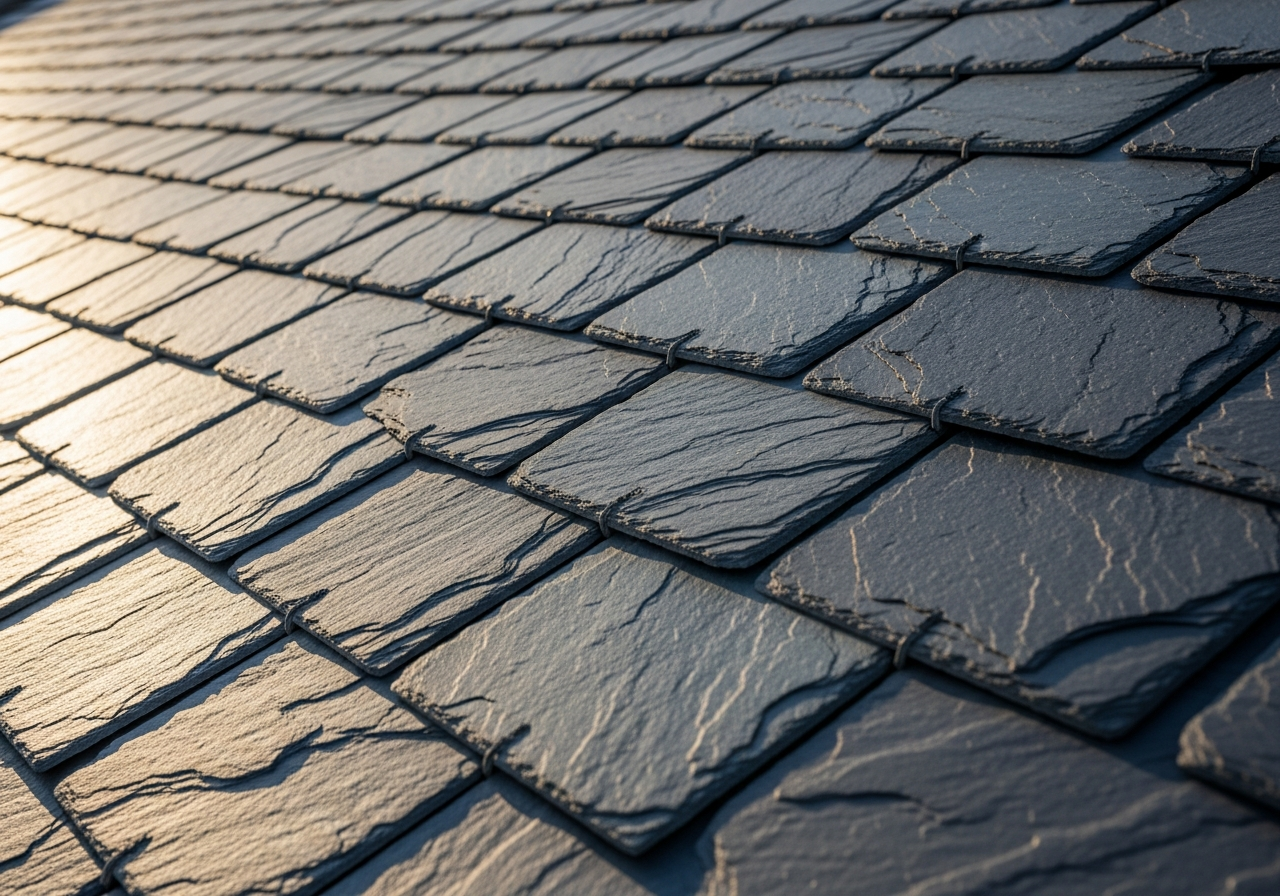
The roof that lasts a century
Slate is stone, and stone does not wear out. A natural slate roof installed correctly will protect your home for 75-100 years or longer. It is the most durable roofing material you can buy, and it looks like nothing else.
We install and repair both natural and synthetic slate roofs across Los Angeles. This is specialized work that requires training and experience most roofers do not have.
Natural slate vs. synthetic
Natural slate is quarried stone, split into thin sheets and shaped for roofing. It comes in grays, blacks, greens, purples, and reds depending on the quarry. Every piece is slightly different, which gives the roof a depth and character that no manufactured product can match. Lifespan: 75-100+ years.
Synthetic slate is made from engineered polymers, rubber, or fiber cement, molded to look like real slate. Good synthetic slate is hard to tell from real stone at street level. It weighs far less (about the same as asphalt shingles), costs about half as much, and lasts 40-60 years. It does not have the same prestige or longevity as natural stone, but it is a very good product.
The choice usually comes down to budget and how long you plan to own the home. If this is your forever house and the budget allows it, natural slate is a once-in-a-lifetime investment. If you love the look but need to keep costs reasonable, synthetic gets you most of the way there.
Why slate works in Los Angeles
Slate actually performs better in LA than in many other parts of the country. The biggest enemy of slate is freeze-thaw cycling, where water gets into micro-cracks in the stone, freezes, expands, and splits the slate. LA does not have that problem. Our mild winters and low humidity mean slate lasts even longer here than its typical lifespan.
LA’s intense UV and heat are not a concern either. Slate is stone. It does not crack from heat, does not lose granules, and does not degrade from UV exposure. Class A fire rating comes standard because it is literally rock.
The one LA-specific consideration is earthquakes. A heavy slate roof adds load to the structure, so proper engineering and flexible fastening systems matter. We use copper nails and installation methods that allow for slight seismic movement without cracking slates.
Installation: this is not a DIY job
Slate roofing installation is among the most specialized trades in the industry. Every slate is individually inspected, sorted by thickness, and installed with copper or stainless steel nails. The underlayment, flashing, and fastening all have to be done to a higher standard than other roofing materials because mistakes are expensive to fix.
Our process:
- Structural assessment - Verify your roof framing can handle 800-1,500 lbs per square. Reinforce if needed.
- Full tear-off - Strip to decking, inspect and repair all sheathing
- Premium underlayment - Synthetic underlayment with ice and water shield at all critical areas
- Copper flashing - Slate roofs get copper flashing, not aluminum or galvanized steel. Copper lasts as long as the slate itself.
- Slate installation - Each piece hand-placed with proper headlap, sidelap, and exposure. Sorted by thickness so the roof lays flat.
- Ridge and hip work - Slate ridge caps installed with copper saddles or Boston hip method
- Final inspection - Every course checked, all flashing verified, cleanup complete
Cost
Slate roofing is a premium investment. Here is what it costs in Los Angeles:
- Natural slate: $25,000 to $75,000+ depending on roof size, slate type, and structural work needed
- Synthetic slate: $15,000 to $40,000 for most residential roofs
Natural slate material alone costs $10-$25 per square foot before installation. The labor is specialized and takes significantly longer than other materials. Copper flashing adds cost but is necessary for a proper installation that matches the slate’s lifespan.
The cost is high upfront, but consider this: over 100 years, you would spend $60,000-$90,000 on asphalt shingle roofs (3-4 replacements). A single slate roof covers that entire span for a similar total investment, with better looks and zero hassle.
Maintenance and repair
A slate roof needs almost no maintenance compared to other materials. Annual inspections to check for cracked or slipped slates, and that is about it. The copper flashing and gutters actually need attention more often than the slate.
When a slate does crack (usually from a falling branch or foot traffic from someone who did not know how to walk on a slate roof), individual pieces can be removed and replaced using a slate ripper tool. The key is having matching replacement slates on hand, which we keep in stock for our installed roofs.
One important note: never let anyone walk on your slate roof who does not have specific experience with slate. Walking on slate incorrectly cracks tiles. We use foam pads and specific techniques to avoid damage during inspections and repairs.